Why Software Can’t Solve Sunlight Challenges for Your Outdoor TV
The Difference Between Hardware vs. Physics at the Lake
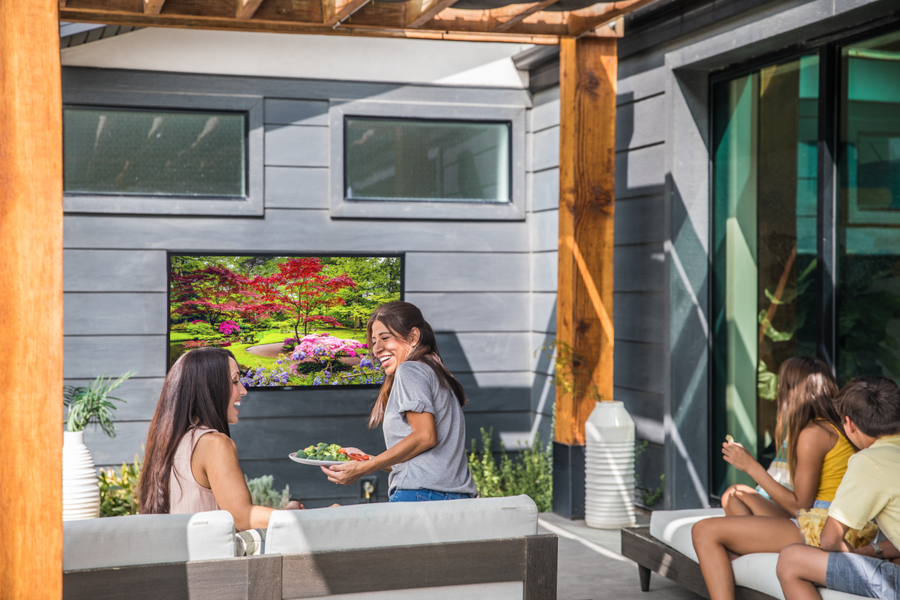
There is a common misconception that a high-end indoor TV—perhaps an extra one from a guest suite or a previous upgrade—is perfect for the patio. You mount it under the shade of your Lake of the Ozarks deck, turn it on for a Saturday afternoon game, and immediately realize something is wrong. Instead of seeing the field, you see a perfect mirror image of the sky, the dock, and yourself.
It’s tempting to go into the settings menu looking for a solution. You crank the brightness to 100% and toggle Vivid Mode on, hoping the software can overcome the glare. However, software cannot rewrite the laws of physics.
Indoor displays are for climate-controlled rooms with static lighting. When placed outdoors, they face sunlight they were never equipped to handle, resulting in a picture that is washed out, distorted, and ultimately unwatchable. It’s the hardware which differentiates outdoor TVs from indoor TVs.
SEE ALSO: 4 Most Common Mistakes When Buying a High-End TV
Why Software Fails to Compensate for Sunlight
The primary enemy of outdoor viewing is specular reflection. Most indoor TVs use glossy screens to enhance contrast in dark living rooms. Outside, that glossy surface reflects ambient light directly back into your eyes. No amount of internal processing will delete a reflection that is physically bouncing off the front of the glass.
Brightness is also a matter of scale. A standard indoor display usually peaks between 300 and 500 nits. To compete with the intensity of a Missouri afternoon on the water, a screen needs to output 2,000 nits or more. Relying on software to boost a low-output panel only creates digital artifacting—an effect where colors look unnaturally blown out, and fine details get lost.
The Science of Etched Glass
True outdoor displays use hardware-based solutions to manage light. Rather than a temporary anti-glare coating that can peel, scratch, or yellow after a season in the humidity, these screens feature chemically etched glass.
Etched glass creates a microscopic, matte-like texture on the screen's surface. Instead of reflecting light in a single, mirror-like direction, the etched surface scatters it in multiple directions. This lets the image pass through clearly despite the sun’s glare. As a practical benefit for families, this micro-texture also naturally resists the fingerprints and smudges that often plague glossy screens in high-traffic outdoor areas.
Choosing the Right Tool for the Environment
Professional-grade outdoor TVs are built with internal thermal management systems—fans and heaters that allow the unit to stay mounted year-round in temperatures ranging from -24°F to over 120°F.
It is also worth noting that using an indoor TV outdoors typically voids the manufacturer’s warranty immediately. Investing in purpose-built hardware means your entertainment system is protected by a warranty designed for the elements.
The hardware you choose also depends entirely on where the TV will live. A screen designed for full shade on a covered porch has different requirements than one for full sun on a poolside or dock.
3D Smart Homes is ready to help you navigate the physics of your backyard. If you want an outdoor theater that stands up to the Missouri sun and the seasons, contact our team today to start your project.